|
|
Vitro-Porcelain Glass:
|
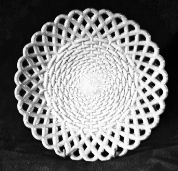
| above: white basket- weave vitro-porcelain glass plate, Sowerby c. 1877. If you are looking for Vitroporcelain Glass there is always some for sale on eBay. You may have to search under Milk Glass See what there is just now - click Milk glass or try clicking vitro-porcelain glass  |
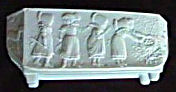
Vitro-Porcelain Glass: A short explanationVitro-Porcelain is pressed glass which is made to look like porcelain or pottery. The term was first introduced by Sowerby's Glassworks in Gateshead, England in 1877, the invention of John George Sowerby. The basket-weave plate shown on the left in white vitro-porcelain was also produced in a pale blue which Sowerby's called "turquiose vitro-porcelain" and a rather unattractive opaque green. These plates sometimes have the Sowerby peacock trademark in the centre, and are more valuable when they do. The dense opaque porcelain-like appearance of vitro-porcelain glass was caused by adding cryolite to the glass mixture. Natural cryolite is sodium aluminium fluoride (Na3AlF6). So far as I know the term was used in the UK but is not common in other countries. Vitro-porcelain-type glass is sometimes called "cast porcelain" and sometimes "cryolite glass". Very similar glass is also known as milk glass, opal glass, opaline, opaque white glass, porzellanglas and porcellain-glas. However, these terms are frequently used for glass made opaque by adding tin oxide to the mixture rather than cryolite. They can sometimes be slightly translucent, which is never the case with vitro-porcelain. Opaque glass made with tin oxide has been made for centuries by the Chinese, the Venetians, Bohemians, Germans and others. |